

Frozen Embryo Transfer (FET): Benefits, Success Tips, and What to Expect

Starting a family can come with its fair share of decisions and challenges. For couples considering assisted reproductive techniques (ART), one key choice is between fresh embryo transfer and frozen embryo transfer (FET). While both methods enable you to fulfill your dream of parenthood, FET is getting traction for its higher flexibility and potential to make the process smoother. 

Frozen Embryo Transfer(FET) Benefits

Frozen Embryo Transfer (FET) is becoming a preferred approach for many IVF specialists owing to its several benefits. This is how FET makes life easier for you and improves your chances of success:

1. No rush implies no stress

With FET, the embryo transfer happens in a later cycle instead of immediately after egg retrieval. It gives you time to relax, recover, and prepare without feeling rushed. IVF may initially feel a bit overwhelming, and this break extends to you a chance to align your mental and physical wellbeing with your fertility goals. Whether you need a break from medicines or want to prioritize personal or professional commitments first, FET fits into your timeline.

2. It gives a break to your body

The doctor-prescribed medications that you take during IVF treatment may make your body feel a little out of sync. Though hormonal stimulation is necessary to produce quality eggs, it temporarily changes the natural state of the uterus. With FET, it allows your uterus to heal and return to a relaxed, optimal state for implantation. This phase of recovery helps create the perfect state for the embryo to attach, increasing the chances of a successful pregnancy

3. Safer for you and your baby

Ovarian stimulation during IVF may sometimes cause ovarian hyperstimulation syndrome (OHSS), a condition that can be a little too uncomfortable. The risk of OHSS is slightly higher when embryo transfer is done immediately after retrieval. FET eliminates this risk by giving your body time to recover and rebalance. This added safety net is good for both you and the baby, giving a seamless and healthier  start to pregnancy.

4. Healthier embryos and positive results

Freezing embryos is more than just a breather, rather, it is a chance to improve the quality of your treatment. By freezing, your IVF specialist takes time to pick the healthiest embryos and even screen them for genetic abnormalities if needed. This crucial step increases the probability of implantation and lessens the risk of miscarriage. For many couples, this added assurance makes the whole experience of IVF treatment more secure and hopeful.

5. Future-proof your pregnancy plans

Among the major benefits of FET is the flexibility that comes with it. If you’re not yet totally up for conceiving right away, frozen embryos are the right way to start your family when the time feels right. They also allow you to plan for more children without repeating the entire IVF process.

Life can be unpredictable, be it a career move, unforeseen health problems, or personal reasons, having frozen embryos don’t let you lose the chance to have biological children. For instance, if one partner goes through treatments like chemotherapy that affect fertility, FET offers an effective way of fertility preservation.

FET Success Tips

1. Eat well, feel well

Treat yourself to nutrient-rich foods like fresh veggies, fruits, lean protein, and whole grains. Drink enough water and hydrating fluids, and skip processed snacks, smoking, and alcohol as they’re not at all fertility-friendly or good for overall well-being. Think of it as giving your body the right ‘princess treatment’ for success.

2. Follow your fertility specialist’s lead

Stick to the plan your doctor provides as it is the safest way forward. Take your medications on time, show up for your appointments, and follow every instruction to a T. It’s the little things that add up to big results.

3. Don’t let stress steal the show

Stress can mess with your body’s balance. Try meditation, deep breathing, or even a good laugh with friends to stay calm. Find what works for you and make time for it every day.

4. Keep it cozy

A warm abdomen can improve blood flow to your uterus. Sip on herbal teas, avoid cold drinks, and keep yourself warm with comfy clothes or a heating pad (not too hot, though) if it’s too cold outside. Your body will be forever grateful for the extra care

5. Take it easy after the transfer

After frozen embryo transfer, be careful and don’t over-exert yourself. Avoid lifting heavy objects, rigorous workouts, and anything that feels too much for the body and mind. You don’t need to stay in bed all day, just listen to your body and prioritize rest as you like. 

These are some of the effective tips for successful frozen embryo transfer process that all fertility doctors recommend. 

What to expect during frozen embryo transfer(FET)?

  • Prepping your body: Your doctor will prescribe hormones to help your uterus develop a thick, healthy lining. This step ensures the best environment for implantation.

  • Thawing the embryos: Specialists carefully thaw the frozen embryos to ensure that they stay viable for transfer.
  • The transfer step: The actual key step of embryo transfer is quick and painless. The doctor uses a thin catheter to place the embryo into your uterus, guided by ultrasound. It’s over in minutes.
  • Post-transfer instructions: After FET, your doctor recommends medication and tips for seamless recovery. You will have a blood test two weeks later to confirm the result.

To sum up: Frozen Embryo Transfer makes your IVF treatment experience smoother and more flexible. It lets you rest, heal, and get your body ready for a successful pregnancy. By following your doctor’s plan, prioritizing health, and managing stress, you prepare yourself for the best possible outcome. At Pristyn Care Ferticity IVF & Fertility Clinics, we guide you through the entire treatment process with personalized treatment. Book an appointment today with one of our IVF specialists today  https://ferticity.com/best-ivf-doctors-in-delhi

असफल इम्प्लांटेशन के लक्षण: जानें कारण और उपाय

असफल इम्प्लांटेशन के लक्षण: जानें कारण और उपाय

इम्प्लांटेशन, गर्भधारण प्रक्रिया का एक महत्वपूर्ण चरण होता है। जब भ्रूण गर्भाशय की दीवार से चिपकता है, तो इसे इम्प्लांटेशन कहते हैं। हालांकि, कुछ मामलों में यह प्रक्रिया असफल हो सकती है, जिसे असफल इम्प्लांटेशन कहा जाता है। यह अनुभव न केवल शारीरिक बल्कि भावनात्मक रूप से भी चुनौतीपूर्ण हो सकता है। इस ब्लॉग में हम असफल इम्प्लांटेशन के लक्षण, इसके कारण, और उपायों पर चर्चा करेंगे।

आईवीएफ(IVF) असफल इम्प्लांटेशन के लक्षण

इम्प्लांटेशन फेल के संकेत महिलाओं में अलग-अलग हो सकते हैं। इसके सामान्य लक्षण निम्नलिखित हैं:

  • मासिक धर्म का समय पर आना: अगर इम्प्लांटेशन सफल नहीं होता है, तो मासिक धर्म समय पर या थोड़ी देर से हो सकता है।
  • सामान्य से भारी रक्तस्राव: मासिक धर्म के दौरान भारी रक्तस्राव होना भी असफल इम्प्लांटेशन का संकेत हो सकता है।
  • थकान और चिड़चिड़ापन: शरीर में हार्मोनल बदलाव के कारण थकान और चिड़चिड़ापन महसूस हो सकता है।
  • पेट में ऐंठन या दर्द: असफल इम्प्लांटेशन के दौरान हल्के या मध्यम पेट दर्द हो सकता है।
  • स्तन में सूजन: हार्मोनल असंतुलन के कारण स्तन में सूजन या संवेदनशीलता महसूस हो सकती है।

इम्प्लांटेशन फेल होने के कारण

असफल इम्प्लांटेशन के कई कारण हो सकते हैं। इनमें शामिल हैं:

  1. गर्भाशय की संरचनात्मक समस्याएं: गर्भाशय में फाइब्रॉइड, पॉलीप्स या किसी भी असामान्यता के कारण भ्रूण का चिपकना मुश्किल हो सकता है।
  2. गर्भाशय की परत की गुणवत्ता: अगर एंडोमेट्रियम की मोटाई या गुणवत्ता अच्छी नहीं है, तो भ्रूण का इम्प्लांटेशन असफल हो सकता है।
  3. हार्मोनल असंतुलन: एस्ट्रोजन और प्रोजेस्टेरोन जैसे हार्मोन के स्तर में असंतुलन गर्भधारण की प्रक्रिया को प्रभावित कर सकता है।
  4. प्रतिरक्षा प्रणाली का प्रभाव: कुछ मामलों में, प्रतिरक्षा प्रणाली भ्रूण को पहचानने में असफल रहती है और इसे गर्भाशय में चिपकने से रोकती है।
  5. गुणसूत्रीय असामान्यताएं: भ्रूण में गुणसूत्रीय असामान्यता के कारण इसका विकास रुक सकता है, जिससे इम्प्लांटेशन फेल हो सकता है।

असफल इम्प्लांटेशन के लिए डायग्नोस्टिक टेस्ट

यदि आपको लगता है कि आपका इम्प्लांटेशन असफल हुआ है, तो इसकी पुष्टि के लिए निम्नलिखित टेस्ट किए जा सकते हैं:

  1. हॉर्मोन टेस्टिंग: प्रजनन हार्मोन जैसे एस्ट्रोजन और प्रोजेस्टेरोन के स्तर का पता लगाने के लिए।
  2. अल्ट्रासाउंड: गर्भाशय और अंडाशय की संरचनात्मक समस्याओं का मूल्यांकन करने के लिए।
  3. हिस्टेरोस्कोपी: गर्भाशय की परत में किसी असामान्यता की जांच के लिए।
  4. ब्लड टेस्ट: ऑटोइम्यून डिसऑर्डर्स या अन्य स्थितियों की पहचान के लिए।

असफल इम्प्लांटेशन रोकने के उपाय

इसे को रोकने के लिए कोई गारंटीशुदा तरीका नहीं है, लेकिन कुछ उपाय गर्भधारण की संभावनाओं को बढ़ाने में मदद कर सकते हैं:

  • पौष्टिक आहार लें: ऐसा आहार चुनें जो प्रजनन स्वास्थ्य के लिए फायदेमंद हो।
  • तनाव कम करें: ध्यान (मेडिटेशन) और योग जैसे उपाय तनाव को कम करने में मदद कर सकते हैं।
  • धूम्रपान और शराब से बचें: ये आदतें आईवीएफ इम्प्लांटेशन समस्या को बढ़ा सकती हैं।
  • नियमित व्यायाम करें: यह रक्त प्रवाह में सुधार करता है और हार्मोन संतुलन बनाए रखता है।
  • फोलिक एसिड सप्लिमेंट्स लें: डॉक्टर की सलाह से फोलिक एसिड लेना फर्टिलिटी को बेहतर बना सकता है।

इलाज के तरीके

यदि असफल आईवीएफ इम्प्लांटेशन बार-बार हो रहा है, तो निम्नलिखित चिकित्सा हस्तक्षेप किए जा सकते हैं:

  • आईवीएफ उपचार: डॉक्टर भ्रूण स्थानांतरण की प्रक्रिया को बेहतर बनाने के लिए रणनीतियां अपनाते हैं।
  • हिस्टेरोस्कोपिक सर्जरी: गर्भाशय की संरचनात्मक समस्याओं को ठीक करने के लिए।
  • इम्यूनोथेरेपी: प्रतिरक्षा प्रणाली की समस्याओं को दूर करने के लिए।
  • हार्मोनल थेरेपी: हार्मोन असंतुलन को ठीक करने के लिए।

(IVF)असफल इम्प्लांटेशन के भावनात्मक प्रभाव से कैसे निपटें

असफल इम्प्लांटेशन का अनुभव भावनात्मक रूप से काफी चुनौतीपूर्ण हो सकता है। इसे संभालने के लिए:

  1. अपने साथी और परिवार के साथ खुलकर बातचीत करें।
  2. तनाव और चिंता को कम करने के लिए काउंसलिंग या थेरेपी की मदद लें।
  3. अपनी पसंदीदा गतिविधियों में शामिल हों, जो आपको मानसिक शांति प्रदान करें।
  4. अपने डॉक्टर से फर्टिलिटी एक्सपर्ट्स की मदद लें।

कब करें फर्टिलिटी विशेषज्ञ से संपर्क

अगर एक साल से ज्यादा समय तक प्रयास के बावजूद गर्भधारण नहीं हो रहा है या बार-बार इम्प्लांटेशन फेल हो रहा है, तो फर्टिलिटी विशेषज्ञ से संपर्क करें। विशेषज्ञ आपकी प्रजनन स्थिति का मूल्यांकन करेंगे और सही उपचार की दिशा में आपका मार्गदर्शन करेंगे।


(IVF)असफल इम्प्लांटेशन का अनुभव करना निराशाजनक हो सकता है, लेकिन इसका मतलब यह नहीं है कि आपके माता-पिता बनने का सपना पूरा नहीं हो सकता। सही जानकारी, जीवनशैली में बदलाव, और फर्टिलिटी एक्सपर्ट्स की मदद से आप सफल गर्भधारण की संभावनाओं को बढ़ा सकते हैं। अगर आपको बार-बार असफलता का सामना करना पड़ रहा है, तो जल्द ही किसी विशेषज्ञ से सलाह लें।

आईवीएफ के बाद सफलता की संभावना बढ़ाने के लिए 6 असरदार कदम

आईवीएफ (इन विट्रो फर्टिलाइजेशन) उन दंपत्तियों के लिए एक आशा की किरण है, जो प्राकृतिक रूप से गर्भधारण में कठिनाइयों का सामना कर रहे हैं। हालांकि, आईवीएफ प्रक्रिया के बाद भी सफलता की गारंटी नहीं होती। इसलिए, कुछ सरल और प्रभावी कदम उठाकर आप इसकी सफलता की संभावना बढ़ा सकते हैं। आइए जानते हैं आईवीएफ के बाद सफलता की संभावना को बढ़ाने वाले 6 महत्वपूर्ण कदम।

1. संतुलित और पौष्टिक आहार आईवीएफ की सफलता को बढ़ाने में मदद करता है

सही आहार आपके शरीर को गर्भधारण के लिए तैयार करता है। अपने भोजन में ताजे फल, सब्जियां, नट्स, दालें और प्रोटीन युक्त खाद्य पदार्थ शामिल करें। कैफीन और जंक फूड से परहेज करें। आहार में ओमेगा-3 फैटी एसिड और एंटीऑक्सिडेंट्स शामिल करें, जैसे मछली, अखरोट और बेरीज़। ये अंडाणुओं और शुक्राणुओं की गुणवत्ता को बढ़ाने में सहायक होते हैं। प्रजनन उपचार के टिप्स में यह सलाह दी जाती है कि खुद को रिलैक्स रखने के लिए दोस्तों और परिवार से बातचीत करें।

2. तनाव को कम करें

आईवीएफ प्रक्रिया मानसिक और शारीरिक रूप से चुनौतीपूर्ण हो सकती है। तनाव को कम करने के लिए योग, ध्यान और गहरी सांस लेने की तकनीकों का अभ्यास करें। तनाव प्रजनन हॉर्मोन्स को असंतुलित कर सकता है, जिससे प्रक्रिया पर नकारात्मक प्रभाव पड़ता है। तनाव कम करने के लिए आप म्यूजिक थैरेपी, हंसने की थेरेपी, या आर्ट थेरेपी भी आजमा सकते हैं। दोस्तों और परिवार के साथ हल्की-फुल्की बातचीत करें, और अपनी चिंताओं को बांटने से न झिझकें।

3. नियमित और हल्का व्यायाम करें

हल्का व्यायाम जैसे टहलना, स्ट्रेचिंग या योग आपके शरीर को सक्रिय रखता है और रक्त संचार में सुधार करता है। व्यायाम एंडोर्फिन नामक ‘हैप्पी हार्मोन’ रिलीज करता है, जो तनाव को कम करता है और आपके मानसिक स्वास्थ्य को बेहतर बनाता है। हालांकि, भारी व्यायाम से बचना चाहिए क्योंकि यह आईवीएफ सफलता दर बढ़ाने में बाधा डाल सकता है। हालांकि, भारी व्यायाम से बचना चाहिए क्योंकि यह आईवीएफ सफलता दर बढ़ाने में बाधा डाल सकता है।

4. आईवीएफ सफलता के लिए  पर्याप्त नींद लें, धूम्रपान और शराब से दूरी बनाएं

प्रति दिन 7-8 घंटे की गहरी नींद लेना आवश्यक है। नींद की कमी से हॉर्मोनल असंतुलन हो सकता है, जो आईवीएफ की सफलता को प्रभावित कर सकता है। नींद के दौरान शरीर खुद को रिपेयर करता है और प्रजनन तंत्र की कार्यक्षमता को बेहतर करता है। सोने का समय निर्धारित करें और इलेक्ट्रॉनिक उपकरणों से दूरी बनाए रखें।

धूम्रपान और शराब का सेवन प्रजनन तंत्र पर नकारात्मक प्रभाव डालता है। धूम्रपान से अंडाणु और शुक्राणु की गुणवत्ता घटती है और गर्भधारण में कठिनाई होती है। शराब के अधिक सेवन से हार्मोनल असंतुलन हो सकता है। इसीलिए, इसे पूरी तरह से छोड़ना आपके लिए फायदेमंद होगा।

5. डॉक्टर की सलाह का पालन करें

आईवीएफ सफलता के उपाय में सबसे महत्वपूर्ण है डॉक्टर की सलाह का पालन करना। दवाओं को समय पर लें, नियमित जांच कराएं और किसी भी असुविधा या सवाल के लिए डॉक्टर से संपर्क करें। अपनी मेडिकल हिस्ट्री और किसी भी मौजूदा स्वास्थ्य समस्या के बारे में डॉक्टर को पूरी जानकारी दें। हर जांच को समय पर पूरा करें और किसी भी तरह की दवा को छोड़ने से बचें। अपने डॉक्टर से नियमित संवाद बनाए रखें, ताकि आपको हर चरण की पूरी जानकारी मिल सके।

6. सकारात्मक माहौल बनाए रखें और अपनी भावनाओं को साझा करें

सकारात्मक सोच और माहौल में रहना मानसिक स्वास्थ्य के लिए बेहद जरूरी है। परिवार और दोस्तों के साथ समय बिताएं और जरूरत पड़ने पर काउंसलिंग का सहारा लें। अन्य आईवीएफ प्रक्रिया के टिप्स से प्रेरणा लें और अपने अनुभव साझा करें।

आईवीएफ की प्रक्रिया धैर्य, सकारात्मक सोच और सही जीवनशैली की मांग करती है। ऊपर बताए गए IVF प्रक्रिया के टिप्स आपकी सफलता की संभावना को बढ़ा सकते हैं।अगर आप भी आईवीएफ सफलता के उपाय अपनाने के लिए विशेषज्ञ परामर्श चाहते हैं, तो आज ही Pristyn Care Ferticity IVF & Fertility Centre में अपना अपॉइंटमेंट बुक करें। यहां अनुभवी डॉक्टर और अत्याधुनिक तकनीक के साथ आपकी प्रजनन समस्याओं का समाधान किया जाता है।

आईवीएफ से जुड़ी मिथक और वास्तविकताएँ: जानें सच्चाई और सही जानकारी”

आईवीएफ (इन विट्रो फर्टिलाइजेशन) IVF उन दंपत्तियों के लिए एक उम्मीद की किरण है जो गर्भधारण में मुश्किलें महसूस कर रहे हैं। हालांकि, आईवीएफ से जुड़ी मिथक और वास्तविकताएँ भी हैं। हम आपको आईवीएफ मिथक और सच्चाई के साथ IVF के बारे में तथ्य देंगे ताकि आप इस प्रक्रिया को अच्छे से समझ सकें।

1.  आईवीएफ सिर्फ उम्र में बड़े लोगों के लिए है? आईवीएफ से जुड़ी मिथक और सच्चाई

यह एक बड़ा मिथक है। कई लोग यह मानते हैं कि आईवीएफ से जुड़ी गलतफहमियाँ सिर्फ उन दंपत्तियों के लिए हैं जो अधिक उम्र के होते हैं। लेकिन ऐसा नहीं है। आईवीएफ प्रक्रिया किसी भी उम्र में की जा सकती है, जब तक महिला की अंडाणु गुणवत्ता ठीक हो। उम्र बढ़ने के साथ आईवीएफ की सफलता दर में थोड़ा फर्क आ सकता है, लेकिन यह पूरी तरह से असंभव नहीं है।

2. आईवीएफ में सफलता की गारंटी नहीं है

कुछ लोग मानते हैं कि आईवीएफ ट्रीटमेंट में पहली बार में ही सफलता मिल जाती है। सच्चाई यह है कि आईवीएफ की सफलता कई कारकों पर निर्भर करती है, जैसे महिला की उम्र, अंडाणु और शुक्राणु की गुणवत्ता, और डॉक्टर की विशेषज्ञता। आमतौर पर सफलता दर 60-70% होती है, लेकिन कुछ मामलों में एक से ज्यादा प्रयासों की जरूरत हो सकती है।

3. आईवीएफ से जन्मे बच्चे बीमार होते हैं , ये  एक आईवीएफ से जुड़ी गलत धारणा है

कुछ लोग यह सोचते हैं कि आईवीएफ से जन्मे बच्चे हमेशा किसी न किसी शारीरिक समस्या से ग्रस्त होते हैं। यह एक गलत विचार है। आईवीएफ में मेडिकल तकनीक काफी उन्नत हो गई है और इससे जन्मे बच्चे सामान्य और स्वस्थ होते हैं।

4. आईवीएफ के बाद गर्भधारण का कोई और तरीका नहीं होता

अगर आईवीएफ असफल हो जाए, तो इसका मतलब यह नहीं है कि गर्भधारण के लिए कोई और तरीका नहीं है। आईवीएफ के बाद भी प्रजनन उपचार के कई अन्य विकल्प उपलब्ध होते हैं, जैसे आईसीएसआई (इंट्रासाइटोप्लाज्मिक शुक्राणु इंजेक्शन) या अंडाणु दान। इन प्रक्रियाओं से गर्भधारण की संभावना बनी रहती है।

5. आईवीएफ में हार्मोनल असंतुलन होता है, ये आईवीएफ से जुड़ी बड़ी मिथक

कुछ लोग मानते हैं कि आईवीएफ प्रक्रिया के टिप्स के दौरान हार्मोनल असंतुलन जरूर होगा क्योंकि आईवीएफ में दवाओं का सेवन किया जाता है। यह एक मिथक है। हां, कभी-कभी हलके साइड इफेक्ट्स हो सकते हैं, जैसे सिर दर्द या मूड स्विंग्स, लेकिन ये अस्थायी होते हैं और जल्दी ठीक हो जाते हैं।

6. आईवीएफ से जुड़ी बड़ी मिथक: आईवीएफ केवल महिलाओं के लिए है

यह विचार भी गलत है। आईवीएफ सिर्फ महिलाओं के लिए नहीं है। आईवीएफ की सही जानकारी के अनुसार, पुरुषों की भूमिका भी अहम होती है। जब पुरुषों में शुक्राणु की गुणवत्ता में कमी होती है, तो आईवीएफ प्रक्रिया का उपयोग किया जाता है। इसके अलावा, आईवीएफ से जुड़ी गलतफहमियाँ के चलते आईसीएसआई जैसी तकनीक का भी इस्तेमाल किया जाता है, जिसमें शुक्राणु को सीधे अंडाणु में डाला जाता है।

7. आईवीएफ सस्ता नहीं होता

यह एक और सामान्य मिथक है कि आईवीएफ की सही जानकारी से पता चलता है कि यह प्रक्रिया महंगी होती है। हालांकि यह सच है कि आईवीएफ महंगा हो सकता है, लेकिन अब कई क्लीनिक और अस्पताल 0% ईएमआई जैसी सुविधाएं देते हैं, जिससे यह प्रक्रिया अधिक सुलभ हो गई है। कुछ बीमा पॉलिसी भी आईवीएफ को कवर करती हैं, जिससे खर्च कम हो जाता है।

8. आईवीएफ से बच्चा हमेशा हेल्दी नहीं होता

यह एक और गलतफहमी है कि आईवीएफ से जन्मा बच्चा हमेशा हेल्दी नहीं होता। लेकिन, ऐसा नहीं है। आईवीएफ के दौरान सभी मेडिकल जांचों और एहतियातों का पालन किया जाता है ताकि बच्चा पूरी तरह से स्वस्थ हो। आधुनिक तकनीक और चिकित्सीय प्रक्रिया के कारण, आईवीएफ से जन्मे बच्चे सामान्य और स्वस्थ होते हैं।

9. आईवीएफ सिर्फ एक तकनीकी प्रक्रिया है, जिसमें प्यार का कोई रोल नहीं है

कुछ लोग यह मानते हैं कि आईवीएफ सफलता के उपाय सिर्फ तकनीकी प्रक्रिया है और इसमें भावनाओं का कोई महत्व नहीं होता। जबकि ऐसा नहीं है, आईवीएफ एक शारीरिक प्रक्रिया के साथ-साथ मानसिक और भावनात्मक समर्थन भी मांगती है। इस प्रक्रिया के दौरान अपने साथी का समर्थन और सकारात्मक दृष्टिकोण बहुत मायने रखता है।

10. आईवीएफ में सब कुछ आसान होता है

यह सोच कि आईवीएफ की प्रक्रिया हमेशा आसान होती है, एक और सामान्य गलतफहमी है। इस प्रक्रिया में शारीरिक और मानसिक चुनौतियाँ आती हैं। लेकिन सही जानकारी और सही मार्गदर्शन के साथ इस प्रक्रिया को सही तरीके से समझा जा सकता है और सफलता की संभावना को बढ़ाया जा सकता है।आईवीएफ प्रक्रिया को लेकर सही जानकारी होना बहुत जरूरी है। आईवीएफ मिथक और सच्चाई को समझने से आपको सही निर्णय लेने में मदद मिलेगी। अगर आप इस प्रक्रिया के बारे में अधिक जानना चाहते हैं, तो Pristyn Care Ferticity IVF & Fertility Centre से संपर्क करें। यहाँ आपको मिलेगी एक अनुभवी टीम और उन्नत सुविधाएँ।

ध्यान रखें, सही जानकारी और सकारात्मक दृष्टिकोण आपकी  हेल्थी प्रेगनेंसी  होने  में  बहुत  मददगार  हो सकता है।

Are there any major risks & side effects of IVF?


Starting a family through in vitro fertilization (IVF) can be a hopeful and life-changing step, especially for couples that deal with infertility problems for a long time. Since IVF has brought new possibilities for so many to grow their families but you must also need to understand about IVF side effects.

Like any medical or surgical procedure, there are certain potential IVF risks and side effects. And, “is IVF safe?” is the most frequently asked question by the couples exploring their fertility treatment options. 

While it’s generally safe, it’s important to understand what might come up during the process so you can be prepared. Let’s walk you through the most common risks of IVF procedure, helping you feel more confident and informed.

IVF (in vitro fertilization) is a process where eggs are taken from a woman’s ovaries, and fertilized with sperm in a lab. After fertilization, doctors place the embryos into the woman’s uterus. While IVF treatment is a blessing for millions of people, some aspects need careful attention. These can include issues from the medications used to stimulate the ovaries (often resulting in ovarian hyperstimulation), problems during egg retrieval or embryo transfer, and a higher chance of having twins or multiples. There are also risks that come with any pregnancy, like birth defects, ectopic pregnancy, or the possibility of miscarriage and pre-term birth. It’s important to know that doctors do everything they can to manage these risks and help ensure the best outcome.

The key to success lies in choosing the right trusted IVF centre with a team of experienced IVF specialists and medical staff. It is always safest to opt for an IVF centre with a clear track record and is fully equipped with advanced world-class technology.

Reducing Ovarian Hyperstimulation Risk: A Guide to Managing IVF Side Effects

If you’re beginning with IVF treatment and worried about OHSS (Ovarian Hyperstimulation Syndrome), the right steps can keep the risks under check.

Your fertility doctor carefully reviews factors like your age, ovarian reserve, and AMH levels to create a treatment plan that is bes suited for you. No cookie-cutter solutions here! During the stimulation stage, doctors perform regular ultrasounds and blood tests to keep track of how your ovaries are responding.

Medications play the most crucial part when it comes to preventing OHSS. Your doctor may recommend following a protocol with lower doses of gonadotropins to make sure that your ovaries aren’t overstimulated. They might also consider a Lupron trigger instead of the usual hCG trigger; this switch alone can nearly eliminate the risk of OHSS.

The objective for higher-risk women is simple: produce enough mature eggs while maintaining safety and equilibrium. The goal is to get outcomes without overstressing your system. Remember, this process is about you – your body, your health, and your future. If something doesn’t feel right or you have doubts and queries, speak up. The right support and proactive care can make all the difference in keeping your IVF experience as smooth and stress-free as possible.

Who is more prone to OHSS during IVF treatment?

Patients with any one or combination of the following risk factors have higher chances of ovarian hyperstimulation:

  • Below 35 years of age
  • High Anti-mullerian hormone (AMH) or antral follicle count (AFC)   
  • Women with PCOS (more sensitive to fertility medication)
  • History of OHSS
  • High dosage of fertility medicines
  • Ovulation triggered with hCG (human chorionic gonadotropin) 
  • Women with low body weight

Females who identify with these factors should have open conversations with their fertility specialist and make sure that they share everything about their fertility and medical history. Doing so helps in covering all loopholes.

Egg Retrieval Risks: What to Expect from IVF Side Effects

The IVF egg retrieval process is mostly safe, and the chances of major risks are very low. Mostly females experience little to no complications, and fertility specialists follow every precaution to ensure your best safety and comfort throughout. 

During egg retrieval, doctors use an ultrasound to move a thin needle through the vaginal wall carefully to access the ovaries. The needle gently pulls out the fluid from each follicle, which contains your eggs.

However, it is better to be well aware of the minor risks and side effects of IVF egg retrieval:

  • Temporary discomfort: Once the procedure is done, some women feel mild bloating, cramping, or constipation. These usually subside within a few days. If there is a need, your doctor may prescribe pain relievers that can help manage any discomfort.
  • Risk of Infection: Infections are rare but possible, usually at the site of puncture. To minimize this, most doctors administer antibiotics during the procedure. The possibility of infection is almost less than 1 in 100.
  • Concerns around anesthesia dosage: Any procedure involving anesthesia carries some risks, but your anesthesiologist will discuss these with you ahead of time so that you are fully aware.
  • More risk in certain conditions: If you have a history of pelvic infections or conditions like ovarian endometriosis, it makes a woman a little more susceptible to complications. Fortunately, doctors guide you with the right steps as per your needs. 

So holistically, IVF egg retrieval is a safe process which only experienced specialized doctors perform. Pristyn Care Ferticity IVF & Fertility Clinics offers an advanced comprehensive fertility treatment. The dedicated team of professionals handhold you throughout the process. Book your consultation today!

Everything about Chocolate Cysts (Ovarian Endometrioma)- symptoms, causes, and treatment

Everything about Chocolate Cysts (Ovarian Endometrioma)- symptoms, causes, and treatment

Contrary to the attractive name “chocolate cysts (ovarian endometrioma)”, it is not a pleasant condition for women to deal with. It comes with its own infertility symptoms. As per a report, almost 20 to 40% of women who have endometriosis eventually also suffer from endometriosis ovarian cyst. A chocolate cyst, also referred to as an ovarian endometrioma is a cyst containing old blood, thus it is dark brown in colour. Such cysts form when endometrial tissues create sacs on the ovaries.

Let’s further learn about the causes, symptoms and treatments of chocolate cysts along with how they negatively affect female fertility.

Major causes of chocolate cysts (ovarian endometrioma)

  • Gene factor
  • Autoimmune condition 
  • Retrograde menstruation (when menstrual blood flows backward into the pelvic cavity)

Other secondary risk factors for chocolate cysts include:

  • Environmental toxins
  • Previous pelvic surgery
  • High estrogen levels

Chocolate cyst (ovarian endometrioma) symptoms:

  • painful periods (dysmenorrhea)
  • Pelvic pain occurring between periods without a clear cause
  • Experiencing pain during sex (dyspareunia)
  • Frequent digestion-related issues
  • Difficulty in bowel movements
  • Heavy menstrual bleeding
  • Problems in achieving pregnancy

Treatment options for chocolate cysts (ovarian endometrioma)

The best-suited treatment plan for chocolate cysts depends upon the severity of symptoms and your reproductive goals. If you want to conceive, the fertility doctor will emphasize protecting and boosting your fertility and sexual health. 

For some females, doctors advise tracking the cyst growth rather than immediately giving a treatment plan. Doctors suggest this “wait and watch” in cases where the cyst is small and does not show severe symptoms or disturb lifestyle.

However, surgery becomes necessary in these scenarios:

  • The size of the cyst is 4cm or more
  •  Extreme menstrual pain that makes it difficult to carry on with routine life
  • Dealing with fertility issues

Surgical treatment for chocolate cysts offers complete and long-term relief from the symptoms. Only in rare and severe cases does a female need to undergo an oophorectomy (surgical removal of the ovaries) so that there are nil chances of recurrence. Thus, it is not a viable option for women looking forward to conceiving. 

Though it is possible to recognize endometriomas in an ultrasound, for more accurate diagnosis doctors may even examine the cyst under a microscope. Only in rare cases of ovarian endometrioma, a large cyst may eventually turn out to be malignant. Thus removing such a large growing and risky cyst is crucial.

You must have understood that ovarian endometriomas can have a significant impact on fertility. These cysts may even trigger inflammation in the reproductive organs, making it difficult for fertilization or implantation. Sometimes, scar tissue and adhesions caused by the cysts can block or distort the fallopian tubes, making it further complicated to conceive naturally.. 

Advanced fertility treatments after ovarian endometrioma surgery

If chocolate cysts or endometriosis have affected fertility, treatments like IVF (In Vitro Fertilization) present a solution to reach parenthood. Pristyn Care Ferticity IVF and Fertility Clinics specialize in managing complex cases, combining surgical expertise with world-class treatments like IVF or ICSI (Intracytoplasmic Sperm Injection) to maximize chances of getting pregnant.

Endometriosis is physically, mentally and emotionally difficult to deal with all on your own, and ovarian endometriomas add to the struggle. The problems double up when you try to conceive. Talk to your fertility doctor about treatments that can ease your symptoms and support your fertility goals. To book an appointment, log onto https://ferticity.com/best-ivf-doctors-in-delhi

आईवीएफ के लिए मानसिक रूप से खुद को तैयार कैसे करें? जानें आसान टिप्स | Pristyn Care Ferticity IVF & Fertility Clinics


आईवीएफ (इन विट्रो फर्टिलाइजेशन) उन दंपतियों के लिए एक वरदान साबित हुआ है, जो गर्भधारण में कठिनाइयों का सामना कर रहे हैं। हालांकि, आईवीएफ प्रक्रिया शारीरिक रूप से जितनी चुनौतीपूर्ण है, उतनी ही मानसिक रूप से भी हो सकती है। आईवीएफ की सफलता के लिए मानसिक और भावनात्मक रूप से खुद को तैयार करना बेहद जरूरी है। यह ब्लॉग आपको बताएगा कि आईवीएफ हेतु मानसिक तैयारी कैसे करें और प्रजनन उपचार को अधिक सकारात्मक दृष्टिकोण से अपनाएं।आईवीएफ हेतु मानसिक तैयारी


आईवीएफ हेतु मानसिक तैयारी के लिए, (IVF) प्रक्रिया को समझना जरूरी है

(IVF)आईवीएफ प्रक्रिया को समझना पहला कदम है।

  • सबसे पहले, यह जानना जरूरी है कि आईवीएफ कैसे काम करता है। डॉक्टर द्वारा दिए गए सभी स्टेप्स और सुझावों को समझें।
  • सही जानकारी से डर और अनिश्चितता को दूर किया जा सकता है।
  • आईवीएफ प्रक्रिया के सुझाव लेने के लिए अपने डॉक्टर से खुलकर बात करें। हर सवाल पूछें और अपनी शंकाओं को दूर करें।

जब आप पूरी प्रक्रिया से परिचित होंगे, तो आपको मानसिक रूप से अधिक मजबूत महसूस होगा। यह भी समझें कि हर किसी का अनुभव अलग होता है, और आपकी यात्रा आपकी अपनी होगी।


आईवीएफ हेतु मानसिक तैयारी में – धैर्य रखना सीखें

आईवीएफ एक लंबी प्रक्रिया हो सकती है। इसमें कई स्टेप्स शामिल होते हैं, जैसे हार्मोनल इंजेक्शन, अंडे का संग्रहण, भ्रूण स्थानांतरण और इंतजार।

  • खुद को इस बात के लिए तैयार करें कि यह प्रक्रिया समय ले सकती है।
  • अपने लक्ष्य पर ध्यान केंद्रित रखें और सकारात्मक बने रहें।
  • अगर प्रक्रिया में देरी होती है या परिणाम अपेक्षा के अनुसार नहीं आते, तो धैर्य बनाए रखना जरूरी है।

याद रखें, यह सिर्फ एक प्रक्रिया है, और इसका उद्देश्य आपकी जिंदगी में खुशी लाना है।


भावनात्मक उतार-चढ़ाव से निपटना सीखें

आईवीएफ के दौरान भावनात्मक उतार-चढ़ाव होना सामान्य है।

  • हार्मोनल इंजेक्शन और लगातार टेस्टिंग के कारण मूड स्विंग्स हो सकते हैं।
  • ऐसे समय में अपने साथी, दोस्तों या परिवार से बात करें।
  • मानसिक स्वास्थ्य के लिए, मेडिटेशन और योग का सहारा लें।

अगर आपको लगे कि आप अत्यधिक तनाव में हैं, तो किसी काउंसलर से मिलें। आईवीएफ मानसिक स्वास्थ्य का ध्यान रखना इस प्रक्रिया को अधिक आसान बना सकता है।


आईवीएफ हेतु मानसिक तैयारी में – सकारात्मक सोच बनाए रखना बहुत ज़रूरी है 

आईवीएफ के दौरान सकारात्मक रहना सबसे महत्वपूर्ण है।

  • अपने आप से उम्मीदें जरूर रखें, लेकिन उन पर अत्यधिक दबाव न डालें।
  • हर छोटे कदम की सराहना करें। यह आपकी प्रगति का हिस्सा है।
  • सकारात्मक गतिविधियों में हिस्सा लें, जैसे पढ़ना, गाना सुनना, या अपने शौक को समय देना।


शारीरिक और मानसिक स्वास्थ्य का ध्यान रखें

आईवीएफ की सफलता के लिए न केवल मानसिक तैयारी जरूरी है, बल्कि शारीरिक फिटनेस भी उतनी ही महत्वपूर्ण है।

  • स्वस्थ आहार का पालन करें और नियमित रूप से व्यायाम करें।
  • कैफीन और अल्कोहल का सेवन कम करें।
  • पर्याप्त नींद लें और तनाव से बचने की कोशिश करें।

इसके अलावा, अपने मानसिक स्वास्थ्य के लिए सकारात्मक सोच और रिलैक्सेशन तकनीक अपनाएं। योग और मेडिटेशन इस दिशा में काफी फायदेमंद हो सकते हैं।


खुद को दोष न दें

आईवीएफ प्रक्रिया के दौरान कई महिलाएं खुद को दोषी महसूस करती हैं।

  • यह याद रखें कि प्रजनन उपचार का चयन करना आपकी बहादुरी और दृढ़ता को दिखाता है।
  • खुद पर अत्यधिक दबाव डालने से बचें।
  • अपने शरीर की सराहना करें और इसे सहारा दें।

अपने प्रति दयालु बनें और इस प्रक्रिया को अपने जीवन का एक सकारात्मक अनुभव बनाने की कोशिश करें।


कहां से मदद लें?


  1. ऐसे क्लीनिक का चयन करें जो आपकी भावनात्मक और शारीरिक जरूरतों को समझे।
  2. डॉक्टर की सलाह पर विश्वास करें और उनके अनुभव का लाभ उठाएं।

प्रजनन उपचार टिप्स

अपनाने से यह सफर आसान हो सकता है।

आईवीएफ प्रक्रिया शारीरिक और मानसिक रूप से चुनौतीपूर्ण हो सकती है, लेकिन सही मानसिक तैयारी, धैर्य और सकारात्मक दृष्टिकोण इसे कम तनावपूर्ण बना सकते हैं। अपने मानसिक और शारीरिक स्वास्थ्य का ध्यान रखें, साथी के साथ संवाद बनाए रखें और हर कदम पर खुद को प्रोत्साहित करें।

अगर आप आईवीएफ मानसिक तैयारी और आईवीएफ प्रक्रिया के सुझाव पर अधिक जानकारी चाहते हैं, तो किसी अनुभवी डॉक्टर से सलाह लें। याद रखें, यह सफर आपके जीवन में खुशियों का नया अध्याय जोड़ने के लिए है।

अधिक जानकारी के लिए, विजिट करें: Pristyn Care Ferticity IVF 

What is Polycystic Ovary Syndrome PCOS? Everything You Need To Know About PCOS.

PCOS (Polycystic Ovary Syndrome) is quite a common endocrine-spanning hormonal disorder that affects women in their reproductive age. As per various studies, around 8-13% of the entire population suffers from it (Source: WHO). But, many women remain unaware of the impact it often has on fertility. 

Let’s begin with the frequently asked questions related to PCOS and fertility to create awareness.

What is Polycystic Ovary Syndrome PCOS?

PCOS (Polycystic Ovary Syndrome) is an endocrine disorder that usually causes problems with the normal functioning of the ovaries. It usually leads to an irregular menstrual cycle, higher levels of male hormones (androgens), and cysts filled with fluid on the ovaries. Such imbalances in hormones affect the ovulation cycle and, thus, fertility issues in PCOS arise.

Along with endocrine and reproductive characteristics, PCOS has its metabolic manifestations, such as insulin resistance with weight gain, predisposing women to an increased risk of type 2 diabetes. While the exact cause of PCOS remains unknown, it is likely caused by a combination of genetic and environmental factors.

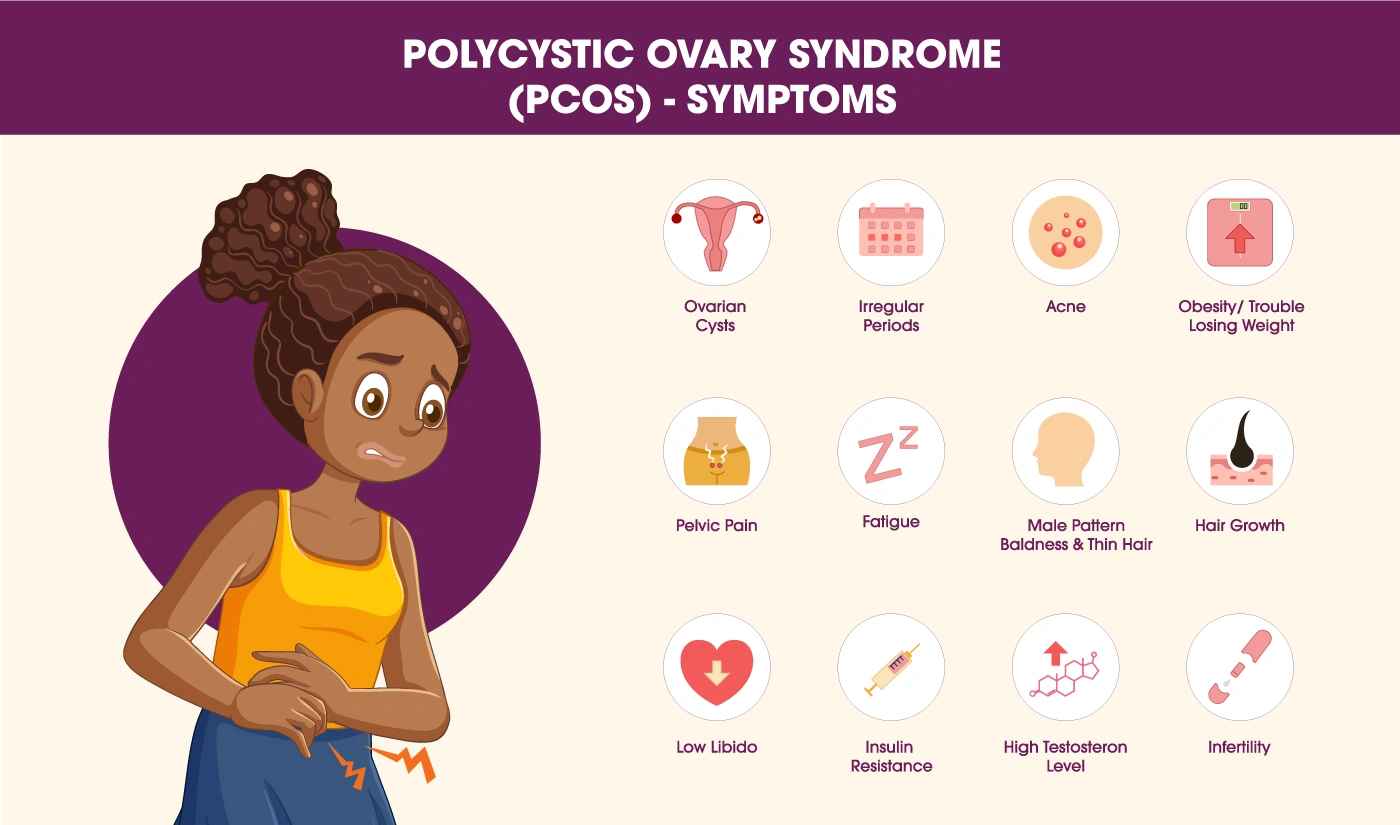
Recognizing PCOS (Polycystic Ovary Syndrome) symptoms

PCOS (Polycystic Ovary Syndrome) symptoms illustration, showing irregular periods, weight gain, acne, excess hair growth, fatigue, pelvic pain, infertility, insulin resistance, obesity, low libido and high testosterones.

Prompt diagnosis requires the detection of these symptoms:

  1. Irregular Menstrual Cycles: Women with PCOS may experience
  2. Irregular, or prolonged periods.
  3. Excessive Hair Growth (Hirsutism): Elevated levels of androgens often produce unwanted hair growth on the face, chest, back, and thighs.
  4. Acne and oily skin: Severe acne, particularly on the face and upper body, is yet another common symptom of PCOS.
  5. Gaining extra kilos: Unexplained weight gain and the inability to lose weight are more common.
  6. Thinning of hair: Hair loss or thinning on the scalp may occur, usually similar to male-pattern baldness.
  7. Patches of Darkened Skin: Skin darkening in the neck, groin, or under the breasts due to insulin resistance.

This early recognition enables prompt medical attention, thus affording a great chance to manage infertility and even the prevention of cardiovascular diseases. 

PCOS (Polycystic Ovary Syndrome) and fertility: busting some myths

PCOS ranks highest among most causes of infertility in women. It creates hormonal disorders that disrupt ovulation, where the ovaries do not release a mature egg. If there is no ovulation, the possibility of getting pregnant becomes a challenge.

The fact reaffirms that PCOS (Polycystic Ovary Syndrome) does not mean infertility is inevitable. Many women with PCOS have been successful in conceiving after being given the right treatment and some lifestyle amendments. Even the early diagnosis of the condition PCOS followed by a proper treatment plan has considerably increased the likelihood of falling pregnant.

PCOS (Polycystic Ovary Syndrome) treatment options

Besides general supportive measures to regulate the symptoms and specific hormonal imbalances of PCOS, the mentioned treatment options have been viewed as the standard approaches:

  • Keep a keen eye on ovulation: Use basal body temperature charts or ovulation predictor kits to closely monitor ovulation, to identify the fertile window.
  • Eat well and keep away junk: Be more inclusive by adding whole foods, lean proteins, fat, and fiber-rich carbs to your diet. While minimizing processed foods and refined sugars as these will aggravate your insulin resistance.
  • Regular workout: Light to moderate exercises will keep body weight normal and control insulin resistance.
  • Timely visit to a specialist: Get a consultation with a fertility expert who would recommend customized treatment like ovulation induction or assisted reproductive technologies (ART).
  • Stress management: Stressful situations affect fertility negatively. Stress relief techniques, such as yoga, meditation, and counselling, may help.

The long-term effect of PCOS on your health

It has far-reaching health implications apart from infertility. Without the right treatment, the risk of type 2 diabetes, high blood pressure, and diseases affecting the heart and blood vessels is greater. Combined with very irregular cycles, cancer of the endometrium can result from this condition.

Routine check-ups and proactive management helps stem these risks. Early detection and continuous care for women manifesting this syndrome is necessary.

Breaking the stigma: spreading more awareness about PCOS & Fertility

PCOS (Polycystic Ovary Syndrome) is grossly underdiagnosed and profoundly misunderstood. Nothing is more intrusive than the stigma against reproductive health issues that undermines women’s will to seek out medical treatment on time. Creating more awareness about PCOS aids to break the silence where women can take hold of their health.

Awareness campaigns, support groups, and educational initiatives ensure better care and support for all women with PCOS.

PCOS often feels overwhelming, especially when it affects fertility, but with the right steps, it’s manageable. Paying attention to the symptoms early and getting the right diagnosis can make a big difference. Simple lifestyle changes, paired with targeted treatments, can go a long way in improving your health. At Pristyn Care Ferticity IVF & Fertility Clinics, our team of experienced fertility doctors offer advanced treatment and comprehensive care to all patients. If you’re planning a pregnancy with PCOS, book your consultation with our doctors. 

  1. Lifestyle changes: Lifestyle changes are among the primary treatments for PCOS; the exercise program plus a low-calorie diet produced better results in ovulation and regulation of menstruation cycles. Even a 5-10% weight loss would improve hormone regulation.
  2. Medications: To manage PCOS, doctors often prescribe medications like oral contraceptives to regulate periods and control hormone levels, fertility drugs to help with ovulation, or metformin to improve insulin sensitivity. While these can be effective, it’s important not to self-medicate, as the wrong approach could lead to unwanted side effects. Always consult a doctor to find what’s best for your body.
  3. Surgery: In case of a failed medicinal treatment, doctors recommend a laparoscopic ovarian drilling procedure to induce ovulation. 
  4. Assisted reproductive technology (ART): For some women struggling to conceive, intrauterine insemination (IUI) or in vitro fertilization (IVF) may offer hope. The success rate of women with PCOS generally has a favorable prognosis, given appropriate medical management and counselling.

PCOS pregnancy best practices

Being informed and taking an active stance can increase the chances of a successful pregnancy for women with PCOS (Polycystic Ovary Syndrome).

  • Keep a keen eye on ovulation: Use basal body temperature charts or ovulation predictor kits to closely monitor ovulation, to identify the fertile window.
  • Eat well and keep away junk: Be more inclusive by adding whole foods, lean proteins, fat, and fiber-rich carbs to your diet. While minimizing processed foods and refined sugars as these will aggravate your insulin resistance.
  • Regular workout: Light to moderate exercises will keep body weight normal and control insulin resistance.
  • Timely visit to a specialist: Get a consultation with a fertility expert who would recommend customized treatment like ovulation induction or assisted reproductive technologies (ART).
  • Stress management: Stressful situations affect fertility negatively. Stress relief techniques, such as yoga, meditation, and counselling, may help.

The long-term effect of PCOS on your health

It has far-reaching health implications apart from infertility. Without the right treatment, the risk of type 2 diabetes, high blood pressure, and diseases affecting the heart and blood vessels is greater. Combined with very irregular cycles, cancer of the endometrium can result from this condition.

Routine check-ups and proactive management helps stem these risks. Early detection and continuous care for women manifesting this syndrome is necessary.

Breaking the stigma: spreading more awareness about PCOS & Fertility

PCOS (Polycystic Ovary Syndrome) is grossly underdiagnosed and profoundly misunderstood. Nothing is more intrusive than the stigma against reproductive health issues that undermines women’s will to seek out medical treatment on time. Creating more awareness about PCOS aids to break the silence where women can take hold of their health.

Awareness campaigns, support groups, and educational initiatives ensure better care and support for all women with PCOS.

PCOS often feels overwhelming, especially when it affects fertility, but with the right steps, it’s manageable. Paying attention to the symptoms early and getting the right diagnosis can make a big difference. Simple lifestyle changes, paired with targeted treatments, can go a long way in improving your health. At Pristyn Care Ferticity IVF & Fertility Clinics, our team of experienced fertility doctors offer advanced treatment and comprehensive care to all patients. If you’re planning a pregnancy with PCOS, book your consultation with our doctors. 

Post-IVF Transfer Care: Effective Tips for Success

The day of your IVF transfer or more widely known as embryo transfer is a big deal. It’s ‘THE MOMENT’ you’ve been eagerly waiting for, and it’s full of hope and miracle. When it actually happens, it’s a huge step in your IVF experience. Post IVF Transfer, it’s completely natural to experience a mix of emotions and wonder what next steps to take. While there’s no guaranteed success, support your body. 

Here are a few practical tips for post-IVF transfer care that set you up for success.

Things to do post-IVF transfer 

  • Enjoy a few days of me-time: You’ve just had a major breakthrough on your IVF journey, a life-changing one. Now, take it slow and give yourself a little more self-love. After embryo transfer, the embryo needs a few days to settle in. Take this as your chance to hit pause. Don’t keep your schedule too tight skip those intense workouts, and just focus on overall well-being.

    Truth bomb: you don’t need to be on bed rest (seriously, the embryo isn’t going to come out).

    But if this feels like the perfect time to have enough time and space to rest and rejuvenate. No one’s judging. Further, taking it easy is about keeping your mind calm during what can feel like an emotional whirlwind. Watch your favorite shows, pick a book you’ve been wanting to read or immerse yourself in funny videos that make you smile. Whatever helps you feel good, lean into it. Be gentle with yourself, you’ve done something amazing. These moments of care promote successful embryo implantation while giving your body the calm it needs.
  • Take prescribed medications: You may have thought of ditching medications post-IVF transfer, but don’t stop until your doctor agrees to it. For many women, progesterone is still crucial in those early weeks. This hormone enables the embryo to implant and stay attached to the uterine wall, allowing your pregnancy the best chance to thrive. Yes, the progesterone shots or vaginal suppositories can sometimes feel challenging, but they play a big role, so hang in there! Your doctor may also recommend baby aspirin. Some studies show that low-dose aspirin improves implantation and pregnancy rates, especially for frozen embryo transfers (FET). But aspirin isn’t for everyone, so stick to your doctor’s plan and don’t make changes on your own. Eventually, those meds give you the best shot at a healthy pregnancy. You got this, so trust the process and keep going!
  • Take folic acid supplement: This is the right time to start taking folic acid supplement post-IVF transfer! Taking folic acid throughout pregnancy offers several benefits. To avoid neural tube abnormalities, you must consume this crucial B vitamin in the right dosage as prescribed by the doctor. Folic acid greatly reduces the potential risk of congenital heart abnormalities in the baby. Also, folic acid can even lower the risk of fetus forming cleft lip or palate. Mostly, your folic acid requirement is covered in prenatal vitamins. However, remember that you’ve had a previous pregnancy or child with a defect in the neural tube.
  • Go on with a healthy diet: If all goes right, you’ll soon be growing a new life inside you, isn’t that amazing? Now’s the right time to start (or stick with) some healthy eating habits to support you and your baby. Focus on a mix of fruits, veggies, protein, calcium, iron, and B vitamins to keep you strong and nourished. While eating well, make sure to have a prenatal vitamin to your daily routine. It’s an easy way to make sure you’re getting all the essential nutrients you need. This is among the key IVF recovery tips that help save your energy levels for the journey ahead.

Things to avoid during post-IVF transfer care

Of course, there are certain things you better avoid doing following your embryo care:

  • Doing a pregnancy test immediately: It’s natural to have a temptation to take a pregnancy test right away, but try resisting the urge. After your IVF transfer, it can take up to two weeks for enough of the hCG hormone to build up for a reliable test result. Meanwhile, count the days until your doctor’s visit, and they’ll do a proper test to confirm everything. Just a little more patience can go a long way!.
  • Indulging in sexual intercourse too soon: After your embryo transfer, it’s highly recommended to take a short break from any pelvic activity. Sexual intercourse causes uterine contractions, this can even affect the embryo placed in your uterus. In rare occurrences, having sex too soon could prevent implantation or increase the risk of miscarriage. Don’t fret about it, it’s just a temporary pause. This small step helps give your embryo the best chance to settle in and thrive. This is a crucial part of post-IVF do’s and don’ts that couples should follow for better outcomes.
  • Neglecting warning signs: After your embryo transfer, keep a check on any symptoms that may hint at an alarming condition called ovarian hyperstimulation syndrome (OHSS), it happens if your body overreacts to the fertility hormones administered during IVF, which may occur in fresh embryo transfer.

    Warning signs of OHSS are abdominal pain, bloating, nausea, vomiting, and diarrhoea. In most cases, it is mild, whereas in serious ones things can escalate fast. If you experience sudden weight gain or intense abdominal pain in your abdomen, immediately call your doctor. Professional care helps tackle the situation the right way whereas indulging in self-medication can lead to greater harm. Monitoring these signs is crucial for after IVF precautions and a smooth journey ahead.

Following these tips is crucial to have a smooth experience following IVF transfer for success. That’s how you’re going to win the waiting game! For expert consultation and comprehensive care with advanced reproductive technology like IVF, ICSI, IUI, book your slot. 

All you need to know about recurrent implantation failure

Imagine trying to start a family, but every attempt ends in disappointment as recurrent implantation failure. It’s tough, we know. But don’t lose hope, choosing the right fertility doctor can bring the miracles you’re waiting for.

For instance, you may have had many attempts at embryo implantation that just didn’t stick. Maybe you’ve experienced implantation bleeding or struggled through the day 3 embryo transfer or post-embryo transfer phases. The stress is real, and it can affect your health, your mind, and your outlook on the journey ahead. It’s difficult to cope with recurrent implantation failure (RIF), especially if you’ve been relying on assisted reproductive technology or IVF.

Good news: understanding the causes of RIF and exploring treatment options can give you a fresh start. From pre-implantation genetic diagnosis to getting the timing right with embryo implantation, every step matters. AND THERE’S HOPE!

Let’s find out more about it.

Alarming signs and symptoms of repeated implantation failure

Lack of particular symptoms: Unlike certain medical disorders, RIF may not show physical signs that indicate this condition. In both successful and unsuccessful implantations, early pregnancy symptoms such as fatigue, breast soreness, or missed periods appear.

Negative pregnancy test: Following a missed period, a negative home pregnancy test may show up as a warning sign, but remember that an early test might also yield negative results.

Other Ways of Implantation Confirmation

Blood test: A simple blood test checks for human chorionic gonadotropin (hCG). If the pregnancy is successful, hCG levels increase noticeably.

Ultrasound: To confirm implantation, a transvaginal ultrasound shows a gestational sac inside the uterus.

Consult your fertility doctor if you have concerns regarding implantation following an IVF treatment. To check the progress of implantation and discuss possible next measures, they can conduct an ultrasound or blood test.

Major causes of recurrent implantation failure

Sometimes, even when everything seems right, implantation doesn’t happen. Here’s a quick breakdown of what could be going on:

Embryo issues:
Chromosomal abnormalities might be stopping the embryo from developing.
Poor-quality embryos often struggle to implant.

Uterine Factors:
Structural problems in the uterus can block implantation.
The uterine lining might not be ready or receptive enough.
Infections like chronic endometritis could also be interfering.

Hormonal Imbalances:
Hormone disruptions, thyroid issues, or even diabetes can have an impact.

Lifestyle Habits:
Smoking, drinking, or an unhealthy diet might reduce implantation chances.
Being stressed or excessive physical activity could be affecting your body.
If these sound familiar, it’s worth discussing with a specialist to find answers that work for you.

How do doctors diagnose recurrent implantation failure?

Going through multiple implantation failures can be a deeply personal issue for a female trying to conceive for a long time. What may be the best treatment approach for one may fail for another. Thus personalized treatment plans are best to address repeated failure after embryo implantation.

Following are some common curative measures that fertility specialists recommend:

Improving embryo quality: The success of embryo implantation often depends on the health of the embryo itself. Advanced lab techniques, including pre-implantation genetic testing for aneuploidies (PGT-A), can screen embryos for genetic issues, increasing the likelihood of successful implantation.

Endometrial receptivity testing: Timing is everything when it comes to implantation. Tests like Endometrial Receptivity Analysis (ERA) pinpoint the best time in a woman’s menstrual cycle and hormonal pattern for an embryo transfer, improving the chances of success.

Preparing the uterus: Hormonal therapies can prepare the uterine lining to be more receptive to the embryo. This step ensures that the body is in the ideal state for embryo implantation, especially during a day 3 embryo transfer or a blastocyst transfer.

Changing lifestyle for better: Small daily habits can have a big impact on fertility. A healthy diet, regular physical activity, stress reduction, and proper self-care can improve overall reproductive health and reduce challenges like implantation bleeding.

Considering advanced treatment options: For those with persistent difficulties, options like surrogacy or using a nestational carrier offer a safer path to parenthood when traditional routes fail.

Regarding fertility and family planning, every step counts, whether it’s timing the post-embryo transfer phase, improving embryo quality, or preparing the body for optimal implantation. With the right combination of treatments and support, successful implantation becomes much easier.

Recurrent implantation failure (RIF) occurs when multiple attempts at embryo implantation fail. It can result from medical issues like hormonal imbalances, uterine problems, or genetic factors, as well as stress or lifestyle habits. Identifying the cause and exploring the right treatments is crucial.

Treatments like pre-implantation genetic diagnosis, hormone therapy, and advanced embryo implantation techniques can boost success rates. At Pristyn Care Ferticity IVF, personalized care and targeted treatments help you move forward toward a healthy pregnancy. Log onto https://ferticity.com/best-ivf-doctors-in-delhi/ to book appointments with our expert fertility doctors.