


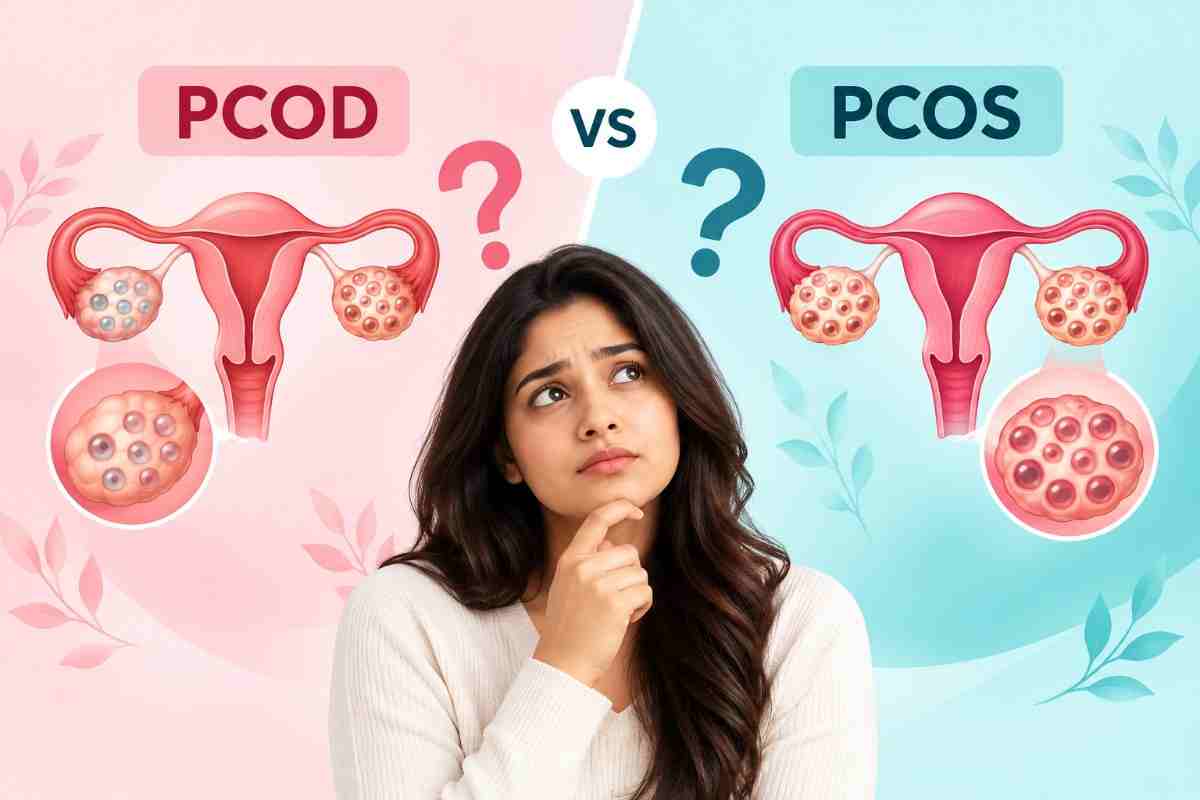
People often use PCOD and PCOS interchangeably, especially in India. However, the two terms do not simply describe the same condition.
PCOS, now also called Polyendocrine Metabolic Ovarian Syndrome (PMOS), is a recognised hormonal and metabolic condition. It can affect ovulation, periods, androgen levels, metabolism and fertility.
People commonly use the term PCOD (Polycystic Ovarian Disease) for symptoms such as irregular periods, hormonal imbalance or multiple ovarian follicles. However, PCOD does not represent the same formal clinical diagnosis as PCOS/PMOS.
So, if a doctor has told you that you have “PCOD” or “PCOS,” focus on more than the name. Your doctor needs to assess whether you ovulate regularly and whether you have any associated hormonal or metabolic concerns.
Important Update: PCOS Has a New Name – PMOS
In May 2026, an international consensus introduced Polyendocrine Metabolic Ovarian Syndrome (PMOS) as the new name for the condition previously known as Polycystic Ovary Syndrome (PCOS). The new name reflects the fact that the condition affects more than the ovaries and involves endocrine and metabolic features.
The American Society for Reproductive Medicine (ASRM) has also endorsed the new terminology.
Does this mean your diagnosis or treatment has changed?
No. The terminology has changed, but you may continue to see PCOS and PMOS used together during the transition. Doctors still assess and manage the same underlying condition.
PCOD vs PCOS /PMOS: What Is the Difference?
| Feature | PCOD | PCOS/PMOS |
|---|---|---|
| Common usage | A commonly used term, particularly in India | Recognised clinical syndrome |
| Main concern | May refer to irregular ovulation or multiple ovarian follicles | Includes hormonal, reproductive and metabolic features |
| Ovulation | May be irregular | May be irregular or absent |
| Periods | May be irregular | Irregular or absent periods are common |
| Androgen levels | May or may not be affected | High androgen levels or related symptoms may occur |
| Fertility | Pregnancy is often possible | Ovulation problems can make conception more difficult |
| Diagnosis | The term does not have a universally accepted diagnostic definition | Doctors use established clinical criteria |
Important: Multiple follicles or “cysts” on an ultrasound do not automatically mean that you have PCOS/PMOS. Doctors consider your symptoms, medical history and, when appropriate, hormone tests and ultrasound findings before making a diagnosis.
What Are the Symptoms of PCOS/PMOS?
Symptoms can vary from one woman to another. Common symptoms include:
- Irregular, delayed or missed periods
- Difficulty getting pregnant
- Excess facial or body hair
- Acne or oily skin
- Hair thinning or hair loss from the scalp
- Weight gain or difficulty managing weight
- Darkening of the skin in certain areas
- Signs of insulin resistance in some women
You do not need to have every symptom to have PCOS/PMOS.
Can You Get Pregnant With PCOD?
Yes. Having PCOD does not mean you cannot get pregnant.
If you ovulate regularly, you may conceive naturally. If you ovulate irregularly, conception may take longer. Your doctor may recommend ovulation tracking or fertility treatment based on your individual situation.
The key factor is whether you ovulate regularly, rather than simply whether an ultrasound shows multiple follicles.
Can You Get Pregnant With PCOS/PMOS?
Yes. PCOS/PMOS does not mean infertility.
PCOS/PMOS can make conception more difficult because irregular or absent ovulation can reduce your chances of becoming pregnant in each menstrual cycle.
Depending on your situation, your doctor may recommend lifestyle measures, medicines to induce ovulation or assisted reproductive techniques such as IUI or IVF. International guidelines recommend healthy lifestyle measures for women with PCOS and evidence-based fertility treatment when needed.
What Helps Manage PCOS/PMOS?
No single treatment works for every woman. Doctors choose treatment based on your symptoms, reproductive goals and metabolic health.
Healthy diet
A balanced diet that includes adequate protein, fibre, vegetables, whole grains and minimally processed foods can support overall metabolic health. You do not need to follow one specific “PCOS diet” to manage the condition.
Regular physical activity
Regular exercise can support metabolic health, cardiovascular health and overall wellbeing. You can choose activities such as walking, strength training, cycling or yoga based on your preference and fitness level.
Maintaining a healthy weight
For women with excess weight, even modest weight loss may improve metabolic health and, in some cases, help regulate periods and support ovulation. However, PCOS/PMOS can also affect women with a healthy weight, so treatment should focus on overall health rather than weight alone.
Medicines
Your gynecologist may prescribe medicines based on your symptoms and goals. These medicines can help manage irregular periods, androgen-related symptoms, metabolic concerns or ovulation problems.
Complementary approaches
Yoga, stress management and other complementary approaches may support overall wellbeing. However, herbal or Ayurvedic products should not replace medical treatment, particularly when you are trying to conceive.
When Should You See a Gynecologist or Fertility Specialist?
Consider medical evaluation if:
- Your periods remain consistently irregular or absent
- You have difficulty getting pregnant
- You notice excessive facial hair, significant acne or scalp hair thinning
- You experience unexplained weight or metabolic changes
- You have PCOS/PMOS and plan to become pregnant
You do not always need to wait 12 months before seeking help if your periods are very irregular or absent. Irregular periods can indicate that you are not ovulating regularly.
A gynecologist or fertility specialist can review your menstrual history and symptoms and, when appropriate, recommend hormone tests or ultrasound to identify what may be affecting your fertility.
PCOD vs PCOS: The Bottom Line
People often use PCOD and PCOS interchangeably, but PCOS/PMOS is the recognised clinical syndrome. The recent name change to PMOS highlights the condition’s broader hormonal and metabolic features.
Most importantly, neither PCOD nor PCOS/PMOS automatically means that you cannot become pregnant. If you have irregular periods or are trying to conceive, finding out whether you ovulate regularly is more useful than focusing only on the label.
Trying to conceive with irregular periods? Consult a gynecologist or fertility specialist to understand your ovulation pattern and discuss suitable treatment options.
