


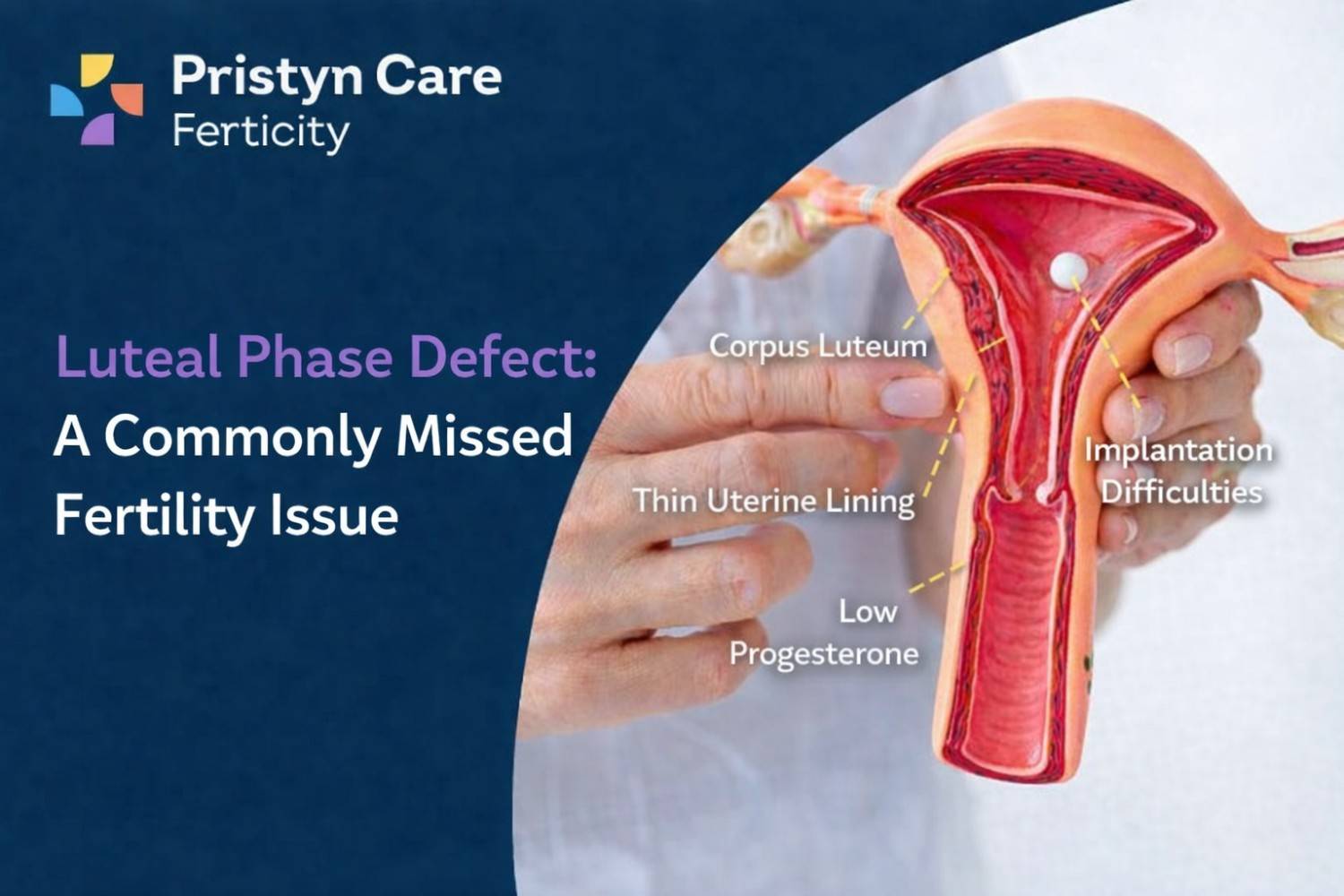
Luteal Phase Defect: A Commonly Missed Fertility Issue
When couples struggle to conceive, attention often turns to ovulation timing, egg quality, sperm health, or fallopian tube blockage. However, one important yet frequently overlooked factor is the luteal phase of the menstrual cycle. A problem during this phase known as Luteal Phase Defect (LPD) can quietly interfere with implantation and early pregnancy, making conception difficult even when ovulation appears normal.
Because LPD does not always produce obvious symptoms, many women remain undiagnosed for years. Understanding what a luteal phase defect is, how it affects fertility, and what treatment options are available can make a significant difference for those trying to conceive.
Understanding the Menstrual Cycle and the Luteal Phase
To understand luteal phase defects, it helps to first know how the menstrual cycle works.
A typical menstrual cycle has two main phases:
- Follicular Phase – Begins on the first day of menstruation and lasts until ovulation
- Luteal Phase – Begins after ovulation and ends when the next period starts
The luteal phase usually lasts 12–14 days and is controlled by the hormone progesterone, which is released by the corpus luteum after ovulation. Progesterone prepares the uterine lining (endometrium) to receive and support a fertilized egg.
If implantation does not occur, progesterone levels drop, and menstruation begins. If implantation does occur, progesterone continues to support early pregnancy until the placenta takes over hormone production.
What Is Luteal Phase Defect (LPD)?
A luteal phase defect occurs when the luteal phase is too short or when the body does not produce enough progesterone to adequately support implantation and early pregnancy.
In simple terms, ovulation may occur normally, but the uterus is not given enough time or hormonal support to sustain a pregnancy.
LPD can result in:
- Difficulty conceiving
- Recurrent early miscarriages
- Failed IVF or IUI cycles
Because ovulation still happens, many women assume everything is normal, which is why LPD is often missed during routine fertility evaluations.
How Luteal Phase Defect Affects Fertility
For pregnancy to occur, the fertilized egg must implant into a healthy, receptive uterine lining. Progesterone plays a key role in this process.
When progesterone levels are insufficient or the luteal phase is too short:
- The uterine lining may not thicken enough
- Implantation may fail
- Early pregnancy may not be sustained
Even if implantation happens, low progesterone can cause the lining to shed prematurely, leading to early pregnancy loss, sometimes before a woman even realizes she is pregnant.
Common Causes of Luteal Phase Defect
LPD is often not a standalone condition but a result of underlying hormonal or medical issues.
1. Hormonal Imbalances
- Low progesterone levels
- Imbalance between estrogen and progesterone
- Thyroid disorders (hypothyroidism or hyperthyroidism)
- Elevated prolactin levels
2. Polycystic Ovary Syndrome (PCOS)
Women with PCOS may ovulate irregularly or release immature eggs, leading to weak corpus luteum function and insufficient progesterone production.
3. Stress and Lifestyle Factors
Chronic stress increases cortisol levels, which can suppress progesterone production. Excessive exercise, poor nutrition, and extreme weight loss can also disrupt the luteal phase.
4. Endometriosis
Endometriosis can interfere with hormonal signaling and reduce progesterone responsiveness of the uterine lining.
5. Advancing Age
As ovarian reserve declines with age, the quality of ovulation and progesterone production may also decrease.
Signs and Symptoms of Luteal Phase Defect
LPD does not always cause noticeable symptoms, but some women may experience:
- Short menstrual cycles (less than 24 days)
- Spotting before periods
- Light or irregular periods
- Difficulty conceiving despite regular ovulation
- Recurrent early miscarriages
- Negative pregnancy tests followed by delayed periods
Because these symptoms can overlap with other conditions, proper diagnosis is essential.
How Is Luteal Phase Defect Diagnosed?
Diagnosing LPD can be challenging, which is another reason it is frequently missed. Fertility specialists often use a combination of methods rather than relying on a single test.
1. Tracking Luteal Phase Length
By monitoring ovulation using basal body temperature charts or ovulation predictor kits, doctors can assess whether the luteal phase consistently lasts fewer than 10 days.
2. Progesterone Blood Tests
Progesterone levels are typically measured about 7 days after ovulation. Low levels may indicate luteal phase insufficiency.
3. Ultrasound Monitoring
Ultrasound scans can evaluate ovulation quality and corpus luteum function.
4. Endometrial Biopsy (Less Common Today)
Previously used to assess endometrial development, this test is now less favored due to inconsistent reliability.
A fertility specialist will often evaluate LPD alongside other fertility factors to ensure an accurate diagnosis.
Treatment Options for Luteal Phase Defect
The good news is that LPD is treatable, especially when identified early.
1. Progesterone Supplementation
This is the most common treatment and may be given as:
- Oral capsules
- Vaginal suppositories or gels
- Progesterone injections
Supplementation supports the uterine lining and improves implantation chances, especially in assisted reproductive treatments.
2. Ovulation Induction Medications
Medications like clomiphene citrate or letrozole can improve ovulation quality, resulting in stronger progesterone production.
3. Treating Underlying Conditions
- Thyroid disorders are managed with appropriate medication
- PCOS may be treated with lifestyle changes and hormonal therapy
- Elevated prolactin levels may require medication
4. Lifestyle Modifications
- Managing stress through relaxation techniques
- Maintaining a healthy body weight
- Ensuring balanced nutrition
- Avoiding excessive exercise
These changes can naturally improve hormonal balance and luteal phase function.
Luteal Phase Defect and Assisted Reproductive Technologies
In procedures like IUI and IVF, luteal phase support is routinely provided because ovarian stimulation can disrupt natural progesterone production.
Progesterone supplementation after embryo transfer significantly improves implantation rates and pregnancy outcomes. This highlights how critical luteal phase support is even in medically assisted cycles.
Can You Get Pregnant with Luteal Phase Defect?
Yes, many women with luteal phase defects successfully conceive and carry healthy pregnancies once the condition is properly treated.
Early diagnosis and individualized treatment play a crucial role. For some women, simple progesterone support is enough. For others, addressing underlying hormonal or lifestyle factors leads to improved fertility outcomes.
When Should You See a Fertility Specialist?
You should consider consulting a fertility expert if:
- You have been trying to conceive for over a year (or 6 months if over 35)
- You experience repeated early miscarriages
- You notice persistent spotting before periods
- Your cycles are consistently short
A specialist can perform targeted testing and create a personalized treatment plan.
Final Thoughts
Luteal phase defect is a commonly missed but important fertility issue that can quietly prevent pregnancy even when ovulation appears normal. Because symptoms are subtle and diagnostic criteria are complex, many women go undiagnosed for years.
The encouraging news is that LPD is highly manageable with modern fertility treatments. With proper evaluation, hormone support, and lifestyle adjustments, many women go on to conceive naturally or with assisted reproductive techniques.
If you suspect a luteal phase issue or have unexplained fertility challenges, seeking timely medical guidance can make all the difference on your journey to parenthood.
