


Adenomyosis and Fertility: What Are Your Options?
For many women on the journey to motherhood, a diagnosis of adenomyosis can feel confusing, overwhelming, and emotionally challenging. This condition often misunderstood and under-diagnosed can impact menstrual health and fertility in ways that are deeply personal and unique to each woman. But the good news is that having adenomyosis doesn’t necessarily mean giving up on the dream of conceiving. In this blog, we’ll break down what adenomyosis is, how it can affect fertility, and most importantly, the options available for women who want to preserve or improve their chances of becoming pregnant.
What Is Adenomyosis?
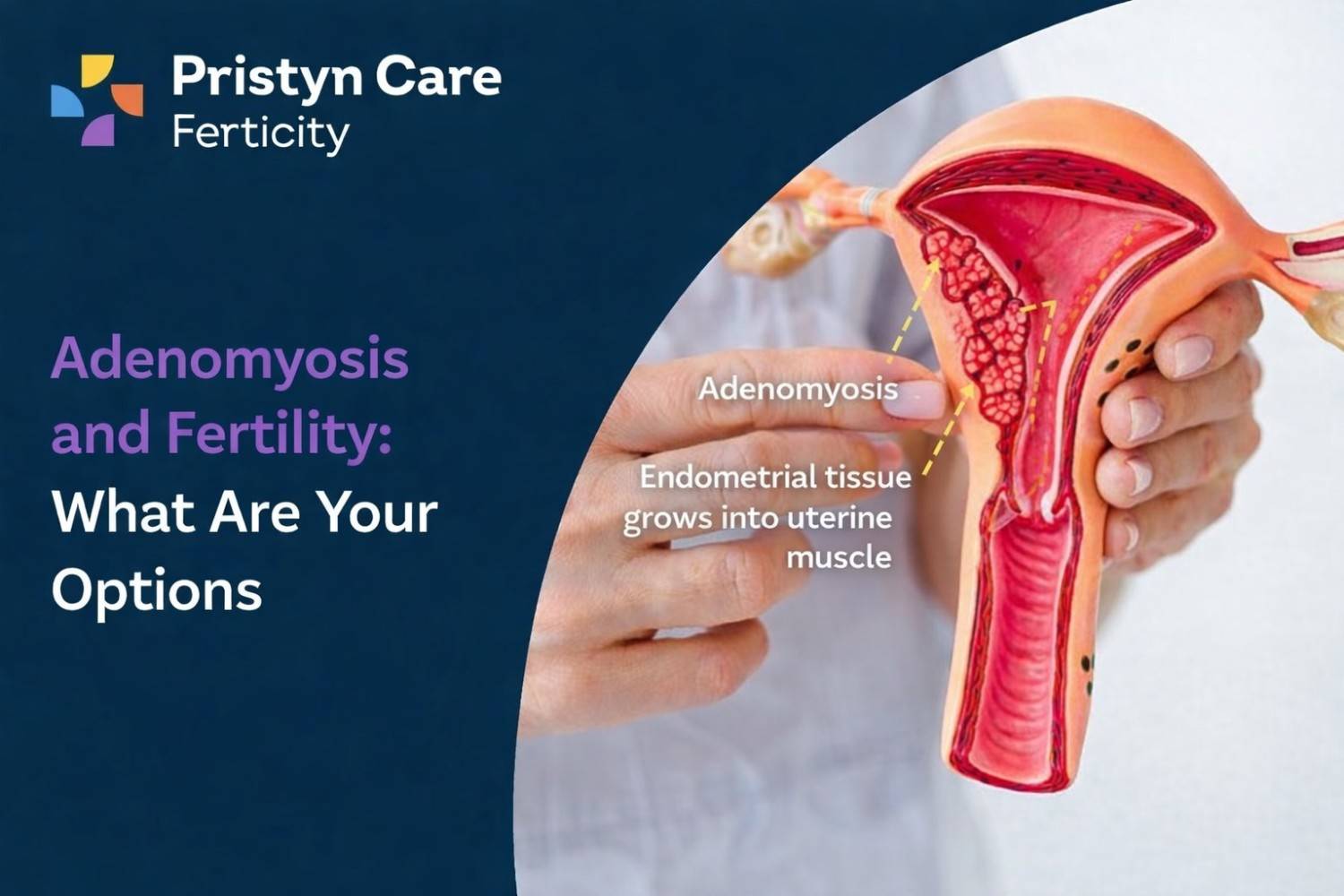
Adenomyosis is a gynecological condition in which tissue normally found lining the inside of the uterus (the endometrium) grows into the muscular wall of the uterus (the myometrium). This abnormal invasion can cause the uterus to become enlarged and may lead to symptoms such as heavy or prolonged menstrual bleeding, painful periods, pelvic pressure or pain, and general discomfort during daily life. It is most commonly detected in women between ages 35–50, though it can occur earlier.
Unlike fibroids, which form distinct lumps, adenomyosis is more diffuse and lacks a clearly bounded mass. This makes diagnosis and treatment planning more nuanced.
How Does Adenomyosis Affect Fertility?
One of the toughest questions women ask after diagnosis is: Will I be able to have children?
Adenomyosis doesn’t necessarily affect egg quality or ovulation directly but it can affect the uterine environment, which is crucial for implantation and sustaining a pregnancy. Research suggests that adenomyosis is associated with lower pregnancy and live birth rates in women undergoing fertility treatments like IVF compared to those without the condition.
This impact on fertility is thought to stem from several factors:
- Inflammation: Adenomyosis can create chronic inflammation in the uterus, which may interfere with embryo implantation.
- Uterine contractility: Abnormal muscular activity in the uterus may impair sperm transport or embryo implantation.
- Structural changes: Thickening of the uterine wall and changes in tissue architecture may influence how receptive the uterus is to a future pregnancy.
Despite these challenges, many women with adenomyosis can conceive, either naturally or with medical assistance. And your treatment plan should align with both your symptoms and your reproductive goals.
Diagnosis: The First Step Toward a Fertility Strategy
Accurate diagnosis is critical. Because adenomyosis shares symptoms with other conditions like fibroids and endometriosis, specialists use imaging studies such as transvaginal ultrasound and MRI scans to confirm its presence and assess severity.
During the fertility evaluation, your doctor may also look for:
- Other contributing conditions (e.g., endometriosis, fibroids)
- Hormonal profile
- Fallopian tube status
- Ovarian reserve
Understanding the full reproductive picture helps in tailoring the best fertility path forward.
Treatment Options for Women Wanting Children
1. Medical (Non-Surgical) Management
Medical therapy aims to manage symptoms and improve the reproductive environment, though it may not “cure” the condition.
Hormonal options include:
- GnRH agonists or modulators: These medications temporarily reduce estrogen levels, effectively creating a menopause-like state that can shrink adenomyotic tissue and reduce inflammation.
- Progestins and hormonal IUDs (e.g., Mirena): These can reduce bleeding and help regulate the uterine lining.
- Anti-inflammatory medications (NSAIDs): Useful for pain control but don’t directly improve fertility.
In fertility treatment protocols especially prior to embryo transfer some reproductive specialists use extended hormonal down-regulation to help create a more receptive uterine environment.
2. Assisted Reproductive Technologies (ART)
For many women with adenomyosis who are struggling to conceive naturally, ART offer powerful options:
• In Vitro Fertilization (IVF) & ICSI
IVF involves stimulating the ovaries to produce eggs, fertilizing them outside the body, and then transferring embryos into the uterus.
- IVF bypasses many barriers to conception.
- Some protocols include pretreatment with hormonal therapies to optimize the uterus before embryo transfer.
- In cases with male-factor infertility or poor sperm quality, ICSI (Intracytoplasmic Sperm Injection) may be recommended.
• Intrauterine Insemination (IUI)
In milder cases or for women with more localized adenomyosis, IUI may be tried before moving to IVF especially if other fertility factors are favorable. Success rates are lower than IVF when significant uterine changes exist, but it’s less invasive and more affordable as a first step.
The choice between IUI, IVF, or other fertility treatment depends on age, symptom severity, ovarian reserve, partner factors, and overall reproductive goals.
3. Surgical Options (Fertility-Sparing)
When adenomyosis significantly disrupts the uterine wall or if other conditions are present, surgery may be considered:
• Adenomyomectomy
This surgical procedure removes adenomyotic tissue while preserving the uterus. It’s technically challenging but may improve fertility in select cases.
• Uterine Artery Embolization (UAE)
A minimally invasive procedure where small particles are introduced to reduce blood flow to the affected areas, causing the lesions to shrink. Some women experience symptom relief, and it may improve fertility outcomes in some cases, though evidence varies.
• High-Intensity Focused Ultrasound (HIFU)
This non-invasive option uses focused ultrasound waves to destroy adenomyotic tissue without incisions. It has shown promising pregnancy rates in some studies, with shorter recovery times and fewer surgical risks.
Each surgical approach comes with its own risks and benefits and a detailed discussion with a specialist is key before proceeding.
4. Radical Treatment: Hysterectomy
When symptoms are severe and fertility is no longer a goal, a hysterectomy (removal of the uterus) offers a definitive cure for adenomyosis. This is usually considered only after all fertility-preserving options have been explored.
Lifestyle and Complementary Strategies
While medical and surgical options form the core of treatment, lifestyle factors also play an important role in supporting reproductive health:
- Healthy diet: Anti-inflammatory foods, rich in antioxidants and omega-3s, may support hormonal balance.
- Stress management: Techniques such as yoga, meditation, and mindful breathing can help regulate hormones and improve overall well-being.
- Regular exercise: Maintaining a healthy weight and improving circulation may help reduce inflammation.
- Tracking ovulation: Understanding your cycle can optimize timing for natural conception attempts.
These approaches won’t cure adenomyosis, but they can support treatment outcomes and improve quality of life.
Risks and Considerations During Pregnancy
Women with adenomyosis who become pregnant may face an increased risk of certain complications, including:
- Miscarriage
- Preterm birth
- Placental abnormalities
Because of these risks, pregnancy in the context of adenomyosis is usually monitored more closely with frequent ultrasounds and specialist care.
Emotional and Mental Well-Being Matters Too
Living with adenomyosis especially when it affects fertility can be emotionally draining. It’s important to acknowledge the mental and emotional aspects of this journey. Connecting with support groups, talking to a therapist, or joining communities of women who share similar experiences can be incredibly validating and comforting.
You are not alone, and there are paths forward. Many women with adenomyosis go on to have successful pregnancies whether naturally or with help. The key is working with a trusted fertility specialist, understanding your individual situation, and making informed decisions tailored to your life goals.
Conclusion
A diagnosis of adenomyosis doesn’t mean you have to abandon hope. While it can impact fertility by altering the uterine environment, there are multiple medical, surgical, and assisted reproductive options that can help women conceive and carry a pregnancy. From hormonal management to advanced ART like IVF, and fertility-preserving surgical procedures, the landscape of care has evolved significantly.
The most important step is working with a compassionate care team that will listen to your symptoms, understand your goals, and create a customized plan. With the right support, preparation, and treatment strategy, many women with adenomyosis do achieve their dream of becoming a mother.
