


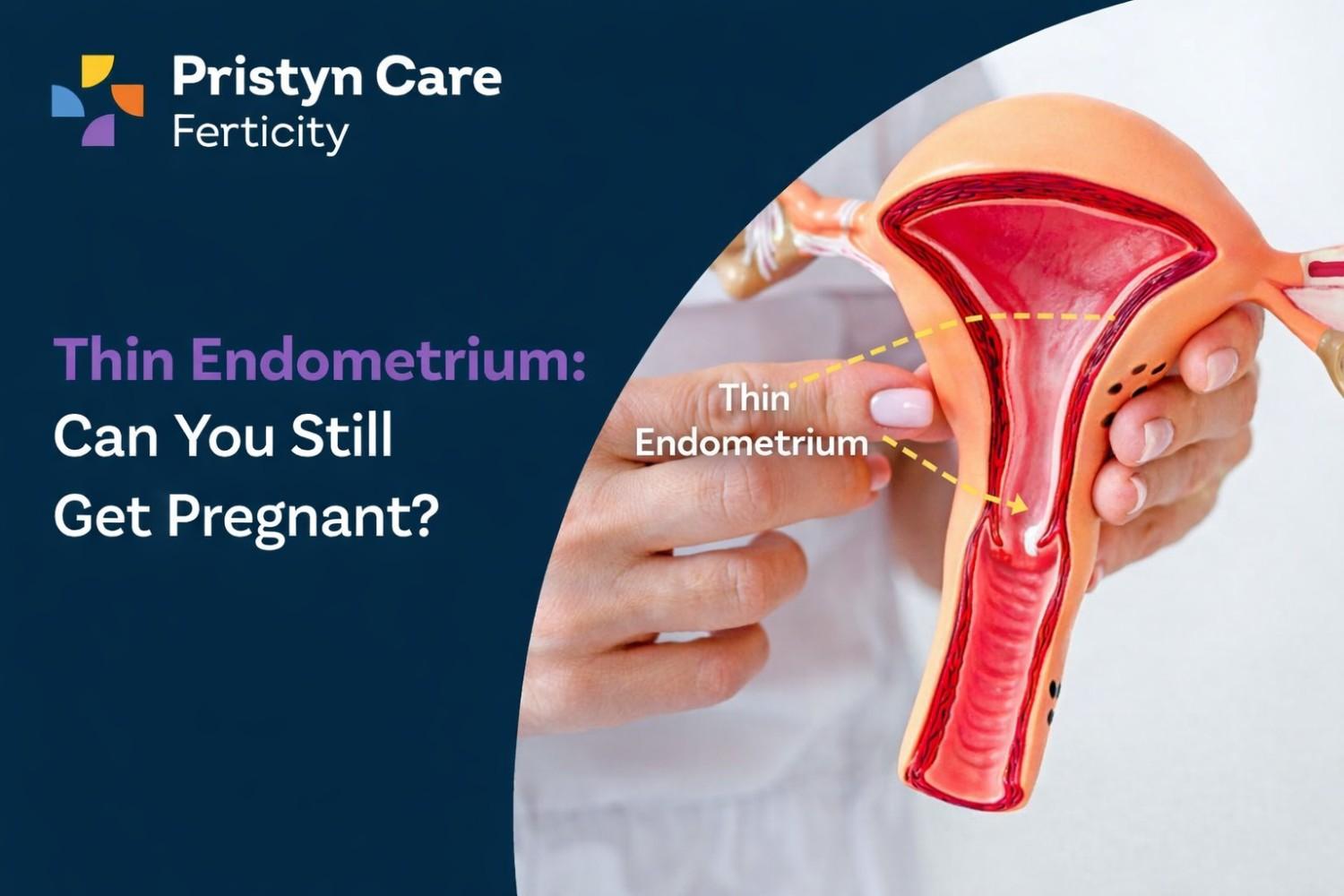
Thin Endometrium: Can You Still Get Pregnant?
Being told that you have a thin endometrium can feel deeply discouraging especially when you are already emotionally invested in trying to conceive. For many women, this diagnosis comes after months or even years of hoping, planning, and waiting. Naturally, the first question that arises is a painful one: “Can I still get pregnant?”
The honest answer is yes, pregnancy is still possible, even with a thin endometrium. While it can make conception more challenging, it does not mean that motherhood is out of reach. Modern fertility care focuses not just on thickness numbers, but on understanding the cause, improving uterine receptivity, and creating the best possible conditions for implantation.
In this detailed blog, we’ll explore what thin endometrium really means, why it happens, how it affects natural pregnancy and IVF, what doctors evaluate, and what options exist to improve your chances step by step, in simple language.
Understanding the Endometrium and Its Role in Pregnancy
The endometrium is the inner lining of the uterus. Each month, this lining responds to hormones primarily estrogen and progesterone by thickening and becoming rich in blood vessels. This process prepares the uterus for a potential pregnancy.
When an embryo forms, it must implant into this lining to receive oxygen, nutrients, and hormonal support. A healthy endometrium allows the embryo to attach securely and continue developing.
If pregnancy does not occur, the lining sheds during menstruation, and the cycle starts again.
In simple terms, the endometrium acts as the foundation of pregnancy. While embryo quality is important, implantation cannot succeed without a receptive uterine lining.
What Is Considered a Thin Endometrium?
Endometrial thickness is measured using transvaginal ultrasound, usually during fertility evaluations or treatment cycles.
Although there is no absolute cut-off, most fertility specialists consider:
- Less than 7 mm around ovulation or embryo transfer as thin
- 7–14 mm as an optimal range for implantation
However, thickness alone does not determine success. Some women conceive with a lining thinner than 7 mm, while others with thicker linings may still face difficulties. This is why doctors look beyond just one measurement.
Can You Get Pregnant With a Thin Endometrium?
Yes many women with thin endometrium do get pregnant, both naturally and through assisted reproductive techniques.
That said, a very thin lining may:
- Reduce implantation chances
- Increase the risk of early pregnancy loss
- Make IVF outcomes less predictable
But these risks vary widely depending on:
- Blood flow to the uterus
- Hormonal balance
- Endometrial quality
- Embryo health
Fertility specialists focus on the overall uterine environment, not just thickness numbers on a scan.
Common Causes of Thin Endometrium
Identifying the cause is crucial, as treatment depends on why the lining is thin.
1. Low Estrogen Levels
Estrogen is the primary hormone responsible for endometrial growth. Low levels may occur due to:
- Poor ovarian function
- Certain fertility medications
- Premature ovarian insufficiency
- Hormonal or thyroid disorders
Without adequate estrogen, the lining cannot thicken properly.
2. Reduced Blood Flow to the Uterus
Healthy blood circulation is essential for a receptive endometrium. Reduced blood flow may result from:
- Previous uterine surgeries
- Chronic inflammation
- Long-term smoking
- Sedentary lifestyle
Poor blood supply can limit nutrient and oxygen delivery to the lining.
3. Previous Uterine Procedures or Trauma
Repeated procedures such as dilation and curettage (D&C), uterine surgeries, or infections can damage the endometrium. In some cases, scarring or adhesions may prevent normal regeneration of the lining.
4. Chronic Endometrial Inflammation
Chronic endometritis is a low-grade infection or inflammation of the uterine lining. It often has no obvious symptoms but can interfere with endometrial development and implantation.
5. Age-Related Changes
As age increases, the uterus may respond less efficiently to hormonal signals. This does not mean pregnancy is impossible, but it may require additional support.
How Doctors Evaluate Thin Endometrium
When thin lining is detected, doctors follow a structured evaluation rather than making immediate conclusions.
Timing of Measurement
Endometrial thickness changes throughout the menstrual cycle. Doctors ensure measurements are taken at the correct time usually near ovulation or before embryo transfer.
Blood Flow Assessment
Doppler ultrasound may be used to assess uterine blood flow, which plays a major role in implantation success.
Hormonal Evaluation
Blood tests are done to assess estrogen, progesterone, thyroid hormones, and other relevant markers.
Uterine Cavity Assessment
Procedures like saline sonography or hysteroscopy help detect scarring, adhesions, polyps, or inflammation that may affect the lining.
Fertility and Treatment History
Doctors also consider:
- Previous pregnancies or miscarriages
- Failed IVF or embryo transfers
- Response to past fertility treatments
This context helps create a personalized plan.
Thin Endometrium and IVF: What You Should Know
In IVF cycles, endometrial thickness is closely monitored. While a thicker lining generally improves success rates, IVF can still succeed with thinner linings under the right conditions.
Doctors may:
- Proceed with embryo transfer if other factors are favorable
- Freeze embryos and delay transfer until the lining improves
- Modify hormonal protocols to support better lining development
The goal is always to balance success rates with time, especially for women with age-related concerns.
Treatment Options for Thin Endometrium
Treatment depends on the underlying cause and individual fertility goals.
Hormonal Support
Estrogen supplementation may be used during fertility cycles to encourage endometrial growth.
Improving Blood Flow
Doctors may suggest lifestyle changes, medications, or supportive therapies to enhance uterine circulation.
Treating Infection or Inflammation
If chronic endometritis is diagnosed, targeted treatment can significantly improve lining response.
Advanced and Regenerative Approaches
In selected cases, newer approaches may be considered under expert supervision, particularly when standard treatments fail.
Emotional Impact: A Diagnosis That Feels Personal
Being told your uterine lining is too thin” can feel like your body is letting you down. These feelings are valid. Fertility struggles are not just medical they are emotional, psychological, and deeply personal.
It’s important to remember that thin endometrium is a medical condition, not a personal failure. With proper guidance and support, many women move forward successfully.
Final Thoughts
So, can you still get pregnant with a thin endometrium?
Yes, pregnancy is still possible. While a thin lining can make implantation more challenging, it does not eliminate hope. With careful evaluation, targeted treatment, and patience, many women achieve successful pregnancies.
If you’ve been diagnosed with thin endometrium, focus on understanding the cause, working closely with your fertility specialist, and trusting that modern medicine offers more options than ever before.
Your journey may look different but the destination is still within reach.
